


By Clayton Heier LMT, Keystone Body Therapies
If you’re dealing with chronic tension, postural issues, or movement limitations, you’ve likely encountered both deep tissue massage and structural integration as possible solutions. While both involve working with muscles and connective tissue, they are fundamentally different in approach, goals, and long-term impact.
At Keystone Body Therapies, we specialize in both. Here’s a clear, well-structured comparison to help you make an informed choice.
What Are They?
Deep Tissue Massage
A focused manual therapy technique that uses sustained pressure to target deep layers of muscle and fascia. It’s designed to release chronic muscle tightness and knots. Read more from the National Center for Complementary and Integrative Health.
- Goal: Relieve tension and reduce pain
- Area-specific: Focused on particular problem areas
- Commonly used for: Athletic recovery, stress relief, injury support
Structural Integration
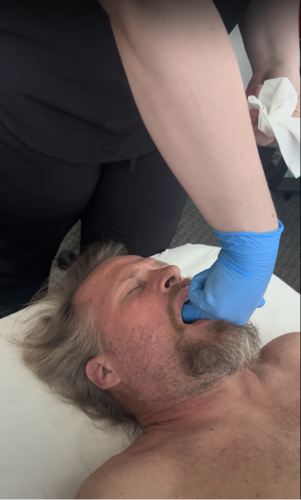
A full-body approach rooted in myofascial manipulation to improve posture and movement. Often delivered as a series (e.g., the 10-series Rolfing model), it focuses on rebalancing the entire structure of the body. Learn more from the International Association of Structural Integrators.
- Goal: Realign the body to improve efficiency and reduce strain
- Whole-body focused: Addresses systemic movement and posture patterns
- Commonly used for: Chronic pain, posture issues, recurring injuries
Side-by-Side Comparison
| Feature | Deep Tissue Massage | Structural Integration |
| Primary Focus | Localized tension relief | Postural realignment and movement efficiency |
| Techniques Used | Firm pressure into muscles/fascia | Slow, sustained fascial manipulation |
| Session Style | Standalone or maintenance sessions | Often a 10-session series |
| Client Involvement | Passive | Often active (e.g., breathing, movement cues) |
| Timeframe for Results | Immediate relief, short-term | Progressive, long-term improvement |
When to Choose Deep Tissue Massage
- You have a tight neck, back, or shoulders
- You’re recovering from a workout or managing short-term pain
- You prefer relaxation-focused, passive bodywork
- You want symptom relief and regular maintenance care
When to Choose Structural Integration
- You have chronic posture issues (e.g., forward head, rounded shoulders)
- Your pain keeps returning despite other treatments
- You want to improve movement mechanics, not just relieve tension
- You’re interested in lasting structural change

Can They Work Together?
Yes—many of our clients alternate between the two modalities. Deep tissue addresses immediate muscular tightness, while structural integration addresses long-term patterns. Our team at Keystone can help you build a custom treatment plan combining both, based on your goals and lifestyle.
Common Questions
Is structural integration painful?
Some sessions can feel intense, but they’re not meant to be painful. Pressure is adapted to your tissue’s response and tolerance.
Do I need all 10 sessions?
The 10-series is recommended for comprehensive alignment, but we also offer single-session assessments and targeted treatment plans.
Is deep tissue massage “deeper” than structural integration?
Not necessarily. Deep tissue focuses on pressure depth, while structural integration focuses on depth of change in alignment and movement.
Final Thoughts
Both deep tissue massage and structural integration are valuable—but they serve different purposes.
- Choose deep tissue for immediate relief from muscle tension and stress.
- Choose structural integration for correcting long-term postural and movement imbalances.
If you’re unsure which treatment fits your needs, schedule a consultation with Keystone Body Therapies. We’ll guide you toward the approach that best supports your body’s goals.
