

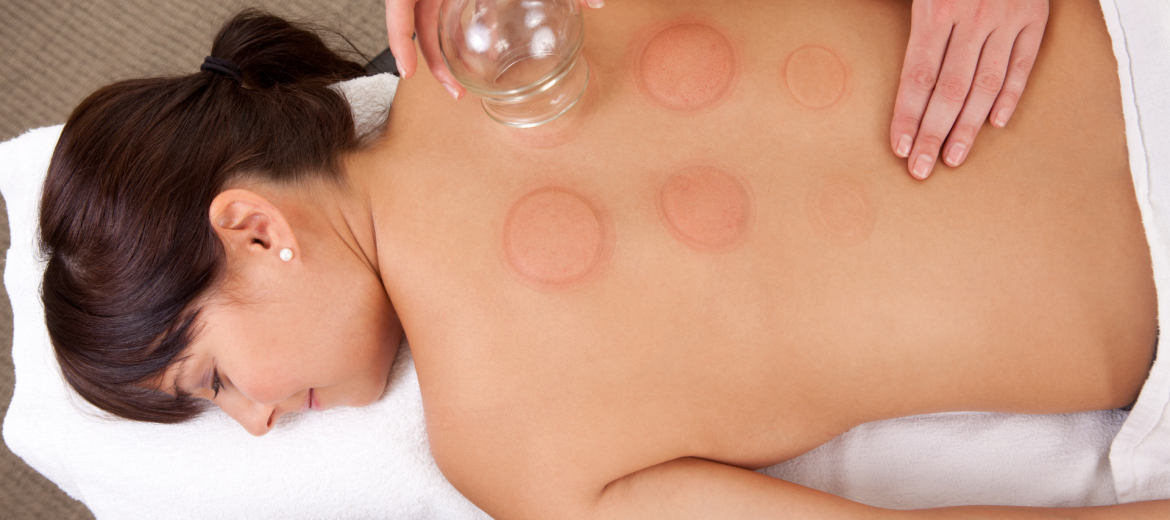
If you’ve scrolled through Instagram lately, or watched an Olympic swimmer step onto the podium with a back full of round, bruise-like circles, you’ve probably wondered what cupping therapy actually is, and why so many athletes, physical therapists, and everyday people swear by it. What was once a niche practice tucked inside Traditional Chinese Medicine and Middle Eastern healing traditions has become one of the most requested modalities in modern bodywork. In this post, we’re breaking down what cupping is, why it’s having a moment, and what’s actually happening beneath the skin when those cups go on.
A Therapy That’s Thousands of Years Old, and Suddenly Everywhere
Cupping isn’t new. According to the National Center for Complementary and Integrative Health (NCCIH), a division of the National Institutes of Health, cupping has been used in traditional medicine systems across China, the Middle East, and beyond for centuries. It involves creating suction on the skin using cups made of glass, ceramic, bamboo, or silicone.
So why is a centuries-old technique suddenly trending? A big part of it is visibility. When Olympic swimmer Michael Phelps showed up to the 2016 Rio Games with dark, circular marks across his shoulders and back, the internet took notice, and interest in cupping spiked almost overnight. Since then, athletes, physical therapists, and wellness influencers have kept the momentum going, sharing before-and-after recovery routines and posting cupping sessions as part of their training regimens.
But the trend isn’t purely social-media hype. It’s also being driven by a shift in how people think about pain and recovery. More people are actively looking for non-pharmacological options for muscle tension, chronic tightness, and post-workout soreness, and cupping fits neatly into that search. As Cleveland Clinic explains, cupping uses suction to draw blood to or away from specific areas of the body, and people primarily turn to it to relieve pain-related conditions.
So, How Does Cupping Actually Work?
At its core, cupping creates negative pressure, essentially the opposite of a massage. Instead of pressing down into the muscle, the cup lifts the skin, fascia, and superficial muscle tissue upward into the cup.
Here’s the mechanism, broken into steps:
- Suction is created. A practitioner places a cup on the skin and removes the air inside it, either with a small pump or, in traditional “fire cupping,” by briefly heating the air inside the cup before it’s placed. This creates a vacuum effect that pulls the skin and underlying tissue upward.
- Blood flow increases. That upward pull dilates the blood vessels near the surface of the skin. Cleveland Clinic notes that the suction force can cause tiny blood vessels called capillaries to break beneath the skin, which is what creates the circular, bruise-like marks people associate with cupping. Those marks aren’t a sign of “toxins” leaving the body, despite a common myth; they’re simply the result of increased local blood flow, similar to a bruise, and they typically fade within a week or two.
- Fascia and muscle tissue are decompressed. This is where cupping earns its clinical name, myofascial decompression. Traditional massage compresses tissue; cupping does the reverse, gently separating layers of fascia (the connective tissue that wraps around muscles) that may have become tight, restricted, or stuck together.
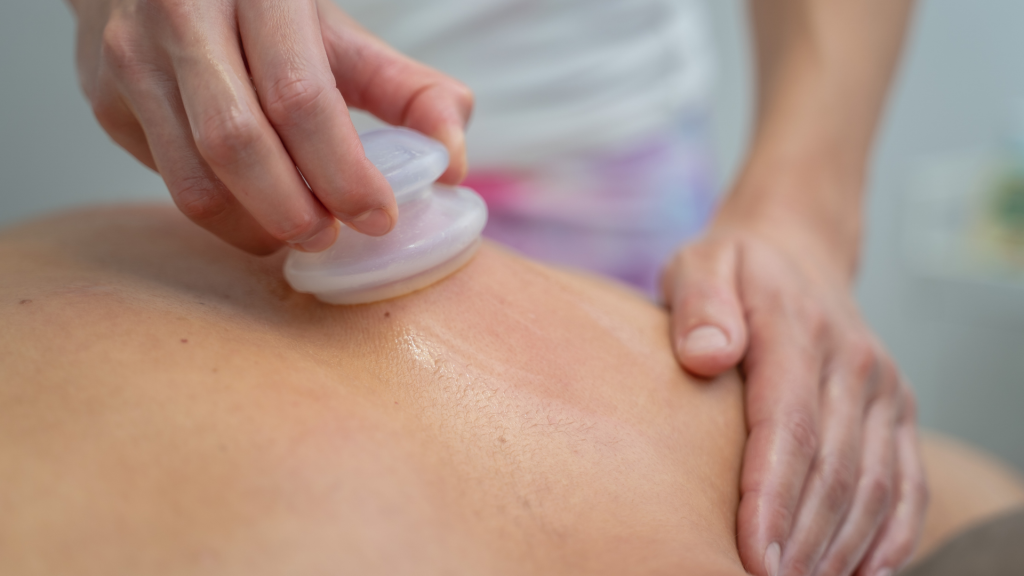
Practitioners often glide the cups slowly across the skin, sometimes called “running cupping”, to work through larger areas of tension, similar to how a therapist would work through a knot with their hands.
- The nervous system responds. The sustained pressure and gentle stretching can help down-regulate the nervous system, encouraging the body out of a stress response and into a more relaxed, parasympathetic state, part of why many people report both physical relief and a sense of calm after a session.
What Does the Research Actually Say?
It’s worth being honest about where the science currently stands. The NCCIH is clear that while cupping shows promise for pain-related conditions, most existing research is still considered lower quality, and more rigorous studies are needed before firm conclusions can be drawn. That said, the body of evidence is growing, and results vary by study. A 2020 pilot trial in the International Journal of Sports Physical Therapy found that athletes with hamstring tightness reported a greater perceived flexibility benefit from a single myofascial decompression (cupping) session compared with self-myofascial release using a foam roller, though other controlled studies have found no measurable change in range of motion, a reminder that cupping’s effects can be more consistently linked to pain relief and perceived tension release than to dramatic flexibility gains. Other randomized trials registered with the U.S. National Library of Medicine’s ClinicalTrials.gov database have investigated cupping for conditions ranging from chronic neck pain and knee osteoarthritis to tennis elbow, with several reporting reductions in pain and improvements in function when cupping is paired with conventional physical therapy.
The consistent theme across reputable sources: cupping isn’t a stand-alone miracle cure, but as a complementary therapy alongside skilled bodywork, it can be a genuinely useful tool for reducing muscle tension, improving circulation, and supporting the body’s natural recovery process.
Who Tends to Benefit Most?
People turn to cupping for a wide range of reasons, including:
- Chronic muscle tightness and knots that don’t respond well to pressure-based techniques alone
- Post-workout recovery and improved range of motion for athletes
- Desk-related upper back, neck, and shoulder tension from long hours of sitting
- General stress relief and nervous system regulation
- Supporting circulation and lymphatic flow in areas of restricted movement
Because cupping works differently than deep tissue or trigger point work, it’s often most effective when it’s used as part of a broader, personalized treatment plan rather than as an isolated add-on.
The Takeaway
Cupping therapy is trending for good reason, and it’s backed by thousands of years of traditional use, a growing body of modern research, and countless people who’ve found real relief from chronic tightness and pain.

But like any modality, it works best in the hands of a trained, experienced practitioner who understands how to integrate it into a treatment plan built around your body’s specific needs, which is exactly the kind of individualized care our licensed therapists provide through Myofascial Cupping sessions at Keystone Body Therapies across our Chandler, Scottsdale, and Goodyear locations.
