

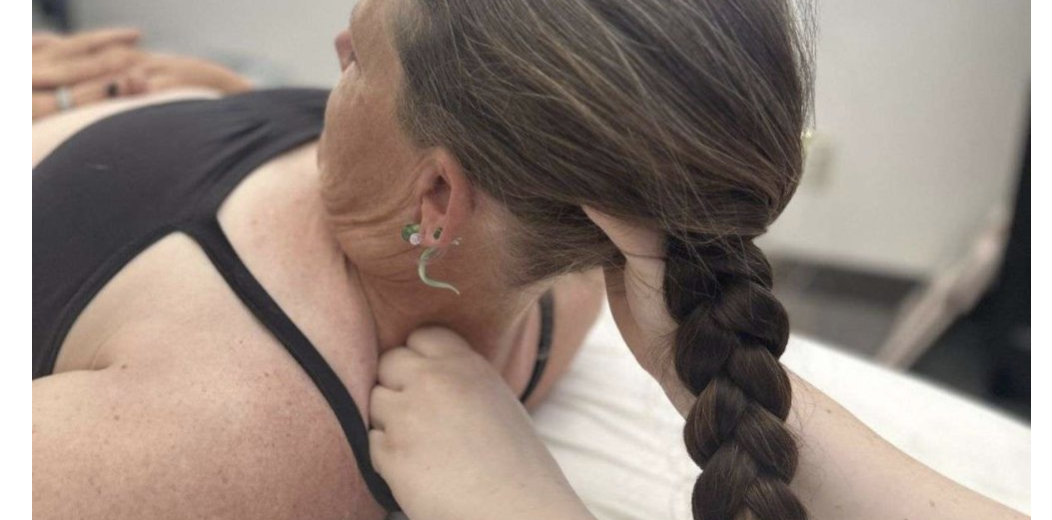
If you’ve ever come back from an injury only to feel like your body “moves wrong”, even after the pain has faded, you’ve experienced something physical therapists and bodywork practitioners see constantly. The tissue may have healed, but the communication between your brain and your muscles hasn’t caught back up. That’s where neuromuscular re-education comes in, and it’s one of the more misunderstood corners of functional therapy.
What It Actually Means
Neuromuscular re-education is a set of techniques designed to restore normal, efficient communication between your nervous system and your muscles. Movement isn’t just a muscle contracting, it’s the brain sending a precise signal down the nerves, telling a muscle exactly when to fire, how hard, and for how long. According to a clinical overview from ACE Physical Therapy, the nervous system controls most of what the body can do, which is why orthopedic physical therapy almost always includes some form of neuromuscular re-education as part of recovery.
When you’re injured, in pain, or simply sedentary for long stretches, those neural pathways can become inefficient. A muscle might be perfectly capable of contracting, but if the signal telling it when to contract is delayed or routed incorrectly, you end up with compensatory movement patterns, other muscles picking up the slack, joints tracking incorrectly, or a lingering feeling of instability long after an injury has technically healed.
This concept is rooted in neuroplasticity – the nervous system’s documented ability to reorganize itself in response to training. The National Institutes of Health describes neuroplasticity as the nervous system’s capacity to change its own structure, function, and connections in response to stimulus. Neuromuscular re-education is a deliberate, guided application of that principle: retraining the nervous system to produce safer, more coordinated movement.
How a Session Works
Rather than a single exercise, neuromuscular re-education blends techniques tailored to what your body needs, which may include manual facilitation methods like proprioceptive neuromuscular facilitation (PNF), balance training on unstable surfaces, postural retraining, and therapeutic exercises that re-establish the correct firing sequence between stabilizing and moving muscles. The common thread is repetition with feedback, since the nervous system learns through guided practice.
Does the Research Back This Up?
This is where neuromuscular re-education stands apart from trendier modalities because it has a genuinely solid evidence base, particularly around PNF techniques. A systematic review and meta-analysis on PubMed examined PNF training across 20 clinical trials and nearly 1,000 patients with low back pain, finding a notably large effect on reducing pain intensity and functional disability. A separate review on stroke rehabilitation found PNF techniques meaningfully improved gait parameters, reinforcing how directly retraining the nervous system can translate into functional change. Research on motor learning and neuroplasticity in musculoskeletal pain has also found that the degree of brain-level reorganization correlates directly with functional recovery, exactly the mechanism this therapy targets.
Who Benefits Most?
In a bodywork and functional therapy setting, neuromuscular re-education tends to help people recovering from a soft tissue injury or surgery who feel unstable even after healing, athletes correcting compensatory patterns built around an old injury, desk workers dealing with chronic postural dysfunction, and anyone whose pain keeps returning to the same spot despite rest and stretching. In many of these cases, the missing piece isn’t more muscle, it’s better communication between the nervous system and that muscle.
How It Differs From Massage or Stretching
It’s easy to lump this in with other hands-on therapies, but the goal is different. Massage and stretching primarily address tissue, releasing tension and improving flexibility. Neuromuscular re-education addresses the signal, not just the tissue. A muscle can be loose and flexible and still fire at the wrong time, which is why some people stretch consistently but still deal with recurring instability. Sessions often feel more like guided training than passive relaxation, since you’re an active participant, resisting a movement, holding a balance position, or consciously engaging a muscle you didn’t realize was “asleep.”
Is It Right for You?
Neuromuscular re-education tends to work best as part of a broader, individualized treatment plan rather than a stand-alone fix.

This is exactly how our licensed therapists approach it at Keystone Body Therapies, where Neuromuscular Re-Education is offered alongside therapeutic bodywork and structural integration across our Chandler, Scottsdale, and Goodyear locations to help retrain lasting, pain-free movement patterns rather than just masking symptoms.
