

Fascia is one of the most important yet least understood tissues in the body. When it becomes tight or restricted, it can influence posture, mobility, athletic performance, and even chronic pain.
Many people first hear about fascia when they experience stiffness that stretching alone does not resolve. This is because fascia behaves differently from muscle. When it becomes dehydrated, overused, or restricted by injury, it can limit how the body moves as a whole system.
Understanding what causes tight fascia and how to restore its mobility is an important step toward improving movement and reducing pain.
What Is Fascia?
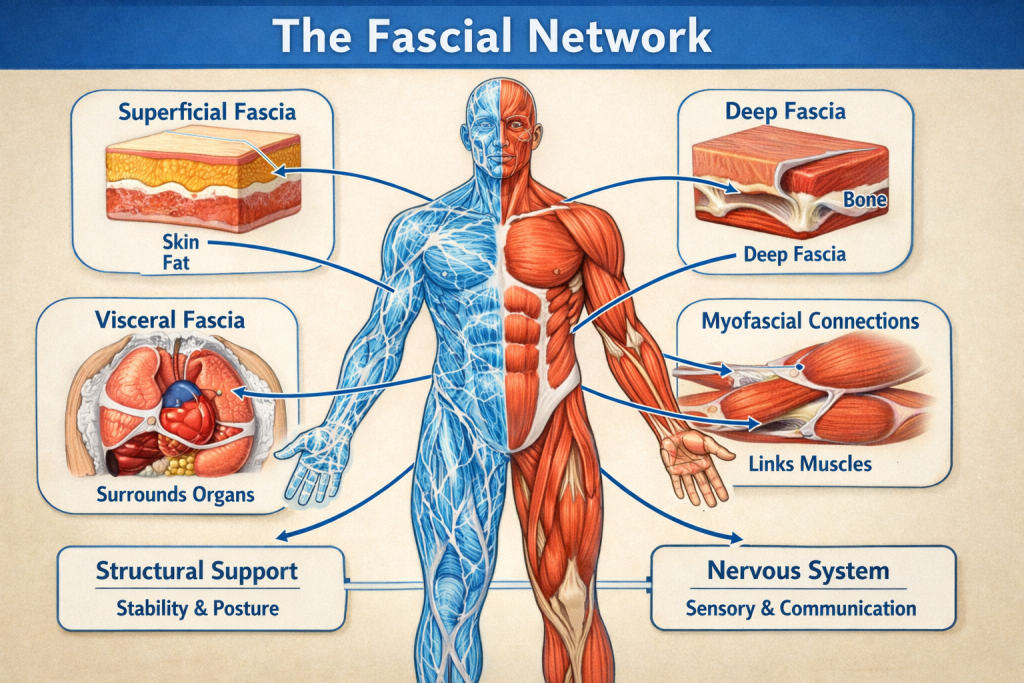
Fascia is a continuous web of connective tissue that surrounds and supports muscles, joints, nerves, and organs throughout the body. Rather than functioning as separate layers, fascia forms an interconnected network that helps transmit force and coordinate movement.
Researchers studying fascial anatomy describe it as a three-dimensional system that influences posture, movement efficiency, and musculoskeletal health.
You can learn more about the fascial system through the Fascia Research Society.
Because fascia connects structures throughout the body, restrictions in one area can influence movement somewhere else.
For example:
- Tight hip fascia may affect knee mechanics
- Restricted thoracic fascia may influence shoulder mobility
- Plantar fascia stiffness may change walking patterns
What Causes Fascia to Become Tight?
Fascia responds to how we move, train, and recover. Several factors can contribute to fascial tightness or restriction.
1. Repetitive Movement Patterns
Activities that repeat the same motion over and over can cause fascial tissues to adapt and stiffen.
Examples include:
- Running long distances
- Cycling
- Golf swings
- Repetitive lifting
- Desk work with fixed posture
Over time, the connective tissue adapts to these patterns and may lose elasticity.
Research published in the Journal of Bodywork and Movement Therapies explains how repetitive loading can influence fascial stiffness and movement efficiency.
2. Injury and Scar Tissue
When the body heals from injury, fascia can develop adhesions. Adhesions occur when connective tissue fibers bind together instead of gliding smoothly.
This may occur after:
- Muscle strains
- Surgery
- Chronic inflammation
- Overuse injuries
These restrictions can limit range of motion and create compensations in surrounding muscles.
The National Library of Medicine provides research explaining how connective tissue remodeling occurs after injury.
3. Dehydration of Connective Tissue
Fascia relies on fluid to maintain its elasticity. When tissues become dehydrated, fascial layers may become sticky and less mobile.
Hydration influences the sliding ability of fascial layers, which affects mobility and tissue resilience.
Research on connective tissue hydration shows that fluid content plays a role in fascial elasticity and mechanical properties.
4. Sedentary Lifestyle or Static Posture
Long periods of sitting or holding the body in one position can lead to fascial shortening.
Common examples include:
- Sitting at a desk for long periods
- Driving long distances
- Limited movement during workdays
Without regular movement, fascia adapts to shorter positions and becomes less elastic.
Harvard Health notes that prolonged static posture contributes to musculoskeletal tension and reduced mobility.
Signs Your Fascia May Be Restricted
Tight fascia does not always present as sharp pain. Instead, many people experience more subtle movement limitations.
Common signs include:
- Persistent stiffness that stretching does not relieve
- Limited range of motion in joints
- Uneven posture or asymmetry
- Chronic tightness in hips, shoulders, or back
- Reduced mobility during athletic activity
Because fascia links different areas of the body, symptoms may appear far from the original restriction.
How Massage and Myofascial Therapy Help Release Fascia
Massage techniques that target connective tissue can help restore fascial mobility.
One of the most effective approaches is myofascial therapy, which uses sustained pressure and movement to improve fascial elasticity and reduce restrictions.
Benefits of myofascial-focused work may include:
- Improved mobility and flexibility
- Reduced muscular tension
- Better circulation and tissue hydration
- Improved posture and alignment
- Reduced risk of overuse injuries
Research published in Frontiers in Physiology highlights the role of fascia in movement coordination and musculoskeletal health.

How Structural Integration Addresses Fascial Patterns
While localized therapy can release individual restrictions, structural integration takes a broader approach.
Structural integration works through the entire fascial system in a progressive series of sessions designed to reorganize connective tissue and improve alignment.
This method focuses on:
- Balancing tension throughout the body
- Improving posture in relation to gravity
- Restoring efficient movement patterns
- Reducing chronic strain patterns
The Rolf Institute explains structural integration as a method of improving structural balance through manipulation of connective tissue and movement education.
Fascial Health for Active Arizona Lifestyles
People living in Arizona often maintain active lifestyles that place repeated stress on connective tissue.
In Phoenix, common activities include:
- running
- cycling
- strength training
- golf
In Flagstaff, many people participate in:
- trail running
- hiking
- skiing and snowboarding
- mountain biking
These activities are great for overall health but can create repetitive movement patterns that affect fascial mobility.
Maintaining fascial health through recovery practices such as mobility work and therapeutic bodywork helps prevent stiffness from building into chronic pain.
When to Seek Professional Bodywork
If tightness continues despite stretching or foam rolling, professional bodywork may help identify deeper fascial restrictions.
At Keystone Body Therapies, therapists use several approaches designed to restore connective tissue mobility and movement efficiency.
These include:
- Therapeutic Bodywork for fascial restriction and mobility
- Structural Integration for posture and alignment
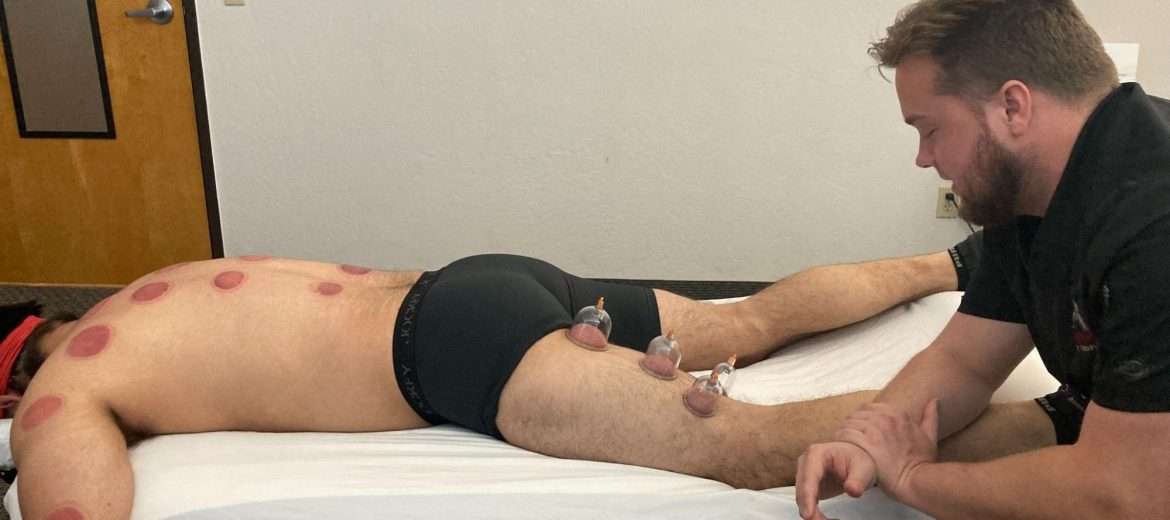
- Myofascial Cupping to improve tissue mobility and circulation
- Injury and Rehabilitative Bodywork for localized dysfunction
You can explore these services here.
Simple Habits That Support Fascial Health
Fascia responds well to regular movement and recovery practices.
Helpful habits include:
- daily mobility exercises
- hydration
- varied movement patterns
- proper recovery after training
- periodic therapeutic bodywork
These habits help maintain tissue elasticity and support long term mobility.
FAQ About Fascia and Massage
Does stretching release fascia?
Stretching can improve muscle flexibility, but fascial restrictions may require slower sustained pressure or movement-based therapy to release fully.
Can massage improve fascial mobility?
Massage techniques that target connective tissue can improve fascial elasticity, circulation, and tissue hydration.
Why does fascia become tight with age?
Aging connective tissue often becomes less hydrated and elastic, especially if movement decreases. Regular mobility and therapeutic bodywork can help maintain tissue health.
Supporting Long Term Fascial Health
Fascia plays a critical role in how the body moves, balances, and performs. When it becomes restricted, the effects can show up as stiffness, pain, or limited mobility.
Understanding the causes of tight fascia and addressing them early can help maintain healthy movement patterns for years to come.
For people who stay active through running, hiking, cycling, or strength training, maintaining fascial mobility is an important part of long term performance and injury prevention.
