

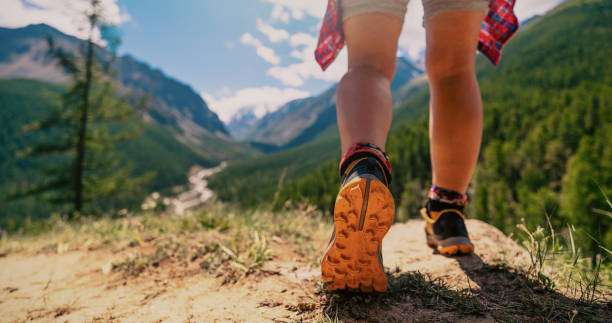
Arizona’s trails are hard to resist: Camelback Mountain, Piestewa Peak, South Mountain, the Superstitions. But rocky, uneven, and often steep terrain also makes the state a hotspot for a very specific category of injury: the twisted ankle and the cranky knee. If you’ve come off a trail limping, you’re far from alone, and understanding why these injuries happen, and how massage therapy fits into recovery, can help you get back on the trail sooner and stronger.
Why Ankles and Knees Take the Hit
Ankles are, by a wide margin, the most commonly injured body part on the trail. One breakdown of hiking injury data found that ankles account for roughly 42% of all hiking injuries, largely from rolling a foot on loose rock or uneven ground. According to OrthoInfo, the patient education resource of the American Academy of Orthopaedic Surgeons, a sprain happens when the ligaments supporting the ankle stretch beyond their normal range and tear, and it’s the single most common reason people miss out on physical activity altogether.
Knees aren’t far behind. A systematic review of over 17,000 injured hikers found that lower-limb injuries dominated across every study reviewed, and knee pain is a near-universal complaint on steep descents, and Arizona’s canyon and mountain trails are full of them. Descending puts several times your body weight through the knee joint with every step, and the American Academy of Orthopaedic Surgeons notes that ligament sprains, strains, and irritation of tendons and cartilage are among the most frequent knee injuries people experience, whether from a single misstep or repetitive strain over miles of trail.
Why Recovery Isn’t Just About Rest
The instinct after a rolled ankle or an achy knee is to rest and wait it out, and rest absolutely has its place. But rest alone doesn’t address one of the biggest slowdowns in soft tissue healing: reduced circulation to the injured area. According to Mayo Clinic Health System, massage therapy is associated with improved circulation, decreased joint inflammation, and reduced pain and soreness, and it’s often recommended as part of a treatment plan to help patients return to daily activities after an injury.
Here’s the mechanism at play: an injured ankle or knee tends to swell, and swelling limits the flow of fresh, oxygenated blood into the area. Skilled massage encourages that circulation, helping deliver the oxygen and nutrients tissue needs to repair itself while also helping move excess fluid out of the joint. Over the following weeks, as muscles around the injury tighten to compensate and protect the area, massage also helps release that adaptive tension before it turns into a second problem, a stiff hip or a nagging lower back from weeks of favoring one leg.
What This Looks Like in Practice
Timing matters. In the first 48 hours after an acute sprain or strain, direct pressure on the injury itself typically isn’t appropriate – gentle work around the area, along with movement, elevation, traction, and heat, is the standard early approach. As swelling subsides and healing progresses, targeted bodywork becomes more valuable: breaking up early adhesions, restoring range of motion in the ankle or knee, and working through the compensatory tightness that builds up in the calf, hamstring, hip, and lower back while you are favoring the injured side.
This is also where a slower return to hiking pays off. Trails don’t stop being uneven just because you’re recovering, and jumping back in before mobility and strength have caught up is one of the more common ways hikers turn a minor sprain into a recurring problem.
Getting Back on the Trail
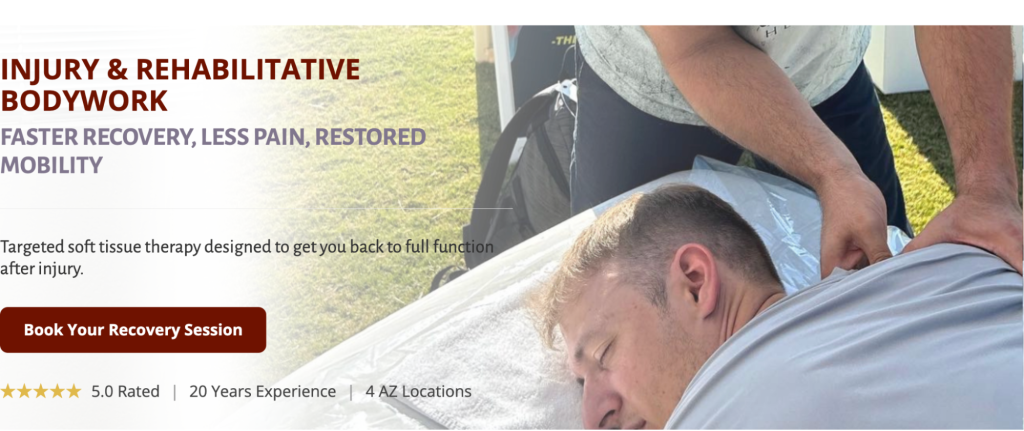
Whether you rolled an ankle on the Camelback Mountain switchbacks or your knees are barking after a steep Superstition descent, targeted bodywork can be a meaningful part of getting back to full strength, and it’s exactly the kind of care our therapists provide through Injury and Rehabilitative Bodywork at Keystone Body Therapies, with locations in Chandler, Scottsdale, and Goodyear to help Arizona hikers recover and get back on the trail with confidence.
