


Structural integration is not a typical massage session. It is a structured, progressive process designed to reorganize the body’s connective tissue system and improve the way the body functions in relation to gravity.
If you are considering starting a structural integration series, preparing your body and mindset can make a significant difference in how effective the work is. Understanding the process ahead of time helps you get more from each session and allows your body to adapt more easily as the series progresses.
This guide explains how structural integration works and what you can do before beginning the series to support better results.
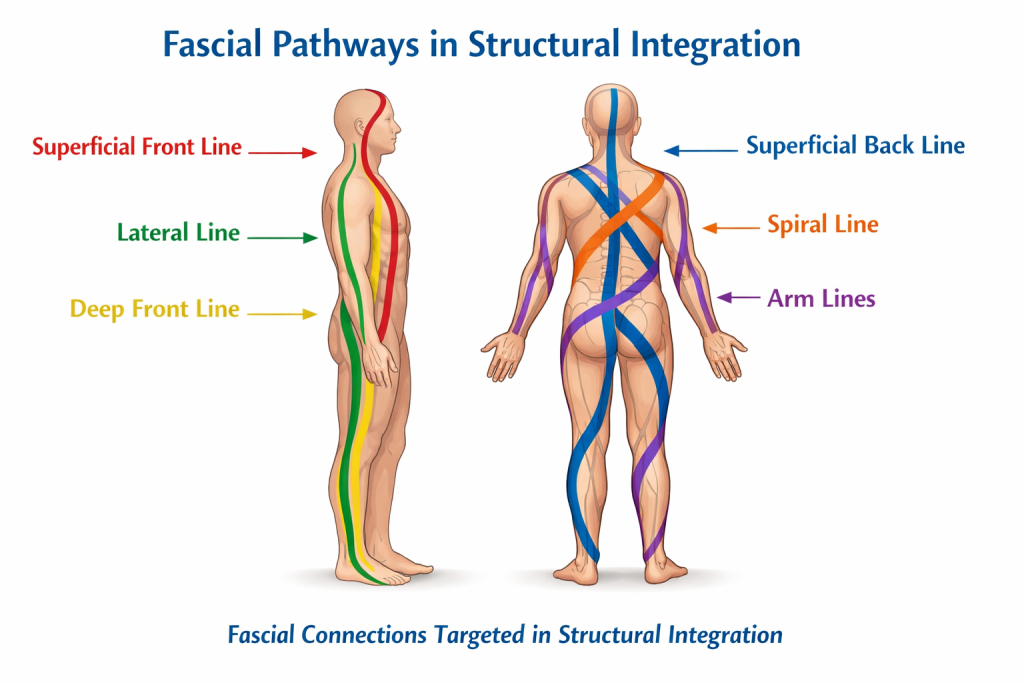
What Is Structural Integration?
Structural integration is a systematic approach to improving posture, movement efficiency, and structural balance. The process focuses on the fascia, the connective tissue network that surrounds muscles, joints, and organs.
Fascia plays a key role in how force moves through the body. When fascial layers become tight or disorganized due to injury, repetitive movement, or poor posture, they can restrict movement and create compensation patterns.
Structural integration addresses these patterns through a sequence of sessions that gradually reorganize fascial tension throughout the body.
Research on fascia and connective tissue highlights how fascial restrictions can influence posture, movement efficiency, and injury risk.
What Happens During a Structural Integration Series?
A traditional structural integration program follows a 12-session progression that works through the entire body.
Each session has a specific focus, such as:
- Opening breathing structures in the rib cage
- Improving support through the feet and legs
- Balancing the pelvis and spine
- Integrating movement patterns through the whole body
Instead of addressing isolated pain points, the process looks at how the entire body works together. This systematic approach allows the body to gradually reorganize its posture and movement patterns.
The Rolf Institute describes structural integration as a method of improving structural balance and efficiency through fascial manipulation and movement education.
Why Preparation Matters
Structural integration often creates lasting changes in how the body moves. Preparing ahead of time helps your body adapt more comfortably and respond better to the work.
Athletes and active individuals especially benefit from preparing their bodies before starting the series because they often have strong movement patterns that may need to shift as alignment improves.
Preparation can help with:
- Tissue responsiveness
- Recovery between sessions
- Improved body awareness
- Better long-term integration of new movement patterns
5 Ways to Prepare for a Structural Integration Series
1. Increase Your Body Awareness
Structural integration involves both hands-on work and movement awareness. Paying attention to posture, walking mechanics, and breathing patterns before starting the series helps you notice changes more easily as the sessions progress.
Practices like mindful movement or posture awareness can support this process. Harvard Health notes that body awareness plays a significant role in preventing musculoskeletal strain and improving movement efficiency.
2. Maintain Gentle Mobility
Light mobility work can help prepare the fascia for deeper structural work.
Helpful practices include:
- Gentle stretching
- Walking or light hiking
- Basic mobility drills for hips and thoracic spine
These activities improve circulation and hydration of connective tissue, which supports fascial responsiveness.
3. Hydrate Consistently
Fascia is highly influenced by hydration. Connective tissue that is well hydrated tends to glide and adapt more easily during manual therapy.
Research in connective tissue physiology suggests hydration plays a role in fascial elasticity and tissue mobility.
Staying hydrated before and throughout the series supports tissue health and recovery.
4. Reduce High Intensity Training Immediately Before Sessions
If you are an athlete or highly active individual, avoid scheduling intense workouts immediately before a structural integration session.
Heavy training can leave tissues inflamed or fatigued, which may limit how well the body responds to the work.
Instead, schedule structural integration sessions on:
- Rest days
- Light training days
- Recovery days
This allows the body to absorb the changes more effectively.
5. Be Ready for Movement Changes
Structural integration often changes how the body distributes tension and load.
You may notice:
- A different walking pattern
- Improved posture
- Changes in how certain muscles activate
- New awareness of movement habits
These changes are part of the process as the body reorganizes around more efficient movement patterns.
The Cleveland Clinic notes that improving posture and alignment can significantly influence musculoskeletal function and injury prevention.

What to Expect During Your First Structural Integration Session
Explain:
- posture assessment
- movement evaluation
- fascia work
- discussion of patterns
Who Benefits Most From Structural Integration?
Structural integration can benefit a wide range of individuals, but it is particularly helpful for people who:
- Experience chronic postural strain
- Have recurring injuries or movement limitations
- Participate in endurance sports or repetitive training
- Spend long hours sitting or working at a desk
- Want to improve movement efficiency and balance
Athletes training on uneven terrain, such as trail runners and hikers in Flagstaff, often notice improvements in balance and stability after structural integration work.
Similarly, active adults in Phoenix who participate in running, cycling, or strength training may find the series helps reduce repetitive strain patterns.

How Keystone Body Therapies Approaches Structural Integration
At Keystone Body Therapies, structural integration is delivered as a 12-session series designed to reorganize fascial tension throughout the entire body.
Sessions focus on:
- Improving posture and structural alignment
- Reducing chronic tension patterns
- Restoring efficient movement mechanics
- Helping the body relate to gravity in a more balanced way
Our therapists combine hands-on fascial work with movement education so clients can carry these improvements into everyday life and training.
Learn more about our structural integration program and other services here.
Frequently Asked Questions About Structural Integration
Is structural integration painful?
Structural integration can involve firm pressure, but the goal is to work with the body’s fascial system rather than force it. Most clients describe the sensation as intense but productive.
How long does a structural integration series take?
Most structural integration programs involve 12 sessions, spaced one to two weeks apart.
How is structural integration different from massage?
Massage typically focuses on relaxation or muscle tension. Structural integration focuses on reorganizing the fascial system and improving alignment.
Is Structural Integration Right for You?
If you’re considering a structural integration series, preparation helps your body adapt to the changes that occur during the process. With proper mobility, hydration, and awareness, the work becomes more effective and long lasting.
At Keystone Body Therapies, our therapists guide clients through the entire structural integration process so improvements in posture and movement carry into everyday life.
