


Finishing a 5K—whether it’s your first or your 50th—is a major win. But the muscle soreness that kicks in after the adrenaline fades? That can slow you down and derail your next workout.
If you want to recover faster, feel less tight, and get back to training sooner, massage therapy can make a huge difference. But not all massage techniques are the same. The key is choosing the right type of massage based on your soreness, training intensity, and goals.
Here are the top massage therapy techniques we recommend for sore muscles after a 5K, and when to use them for optimal recovery.
1. Sports Massage: Your First Line of Recovery
Best for: General soreness, muscle fatigue, tight legs and hips
Sports massage is designed specifically for athletes and active individuals. It combines various techniques—compression, kneading, and stretching—to address the muscle groups most affected by running.
Benefits:
- Increases blood flow to accelerate healing
- Reduces delayed-onset muscle soreness (DOMS)
- Breaks up lactic acid buildup
- Eases tight quads, calves, hamstrings, and glutes
Schedule this 24–72 hours after your race for the best balance of muscle relief and recovery acceleration.
2. Myofascial Release: For Stubborn Tightness and Imbalances
Best for: Deep tension, restricted mobility, past injuries
Running can cause fascial restrictions—stiffness in the connective tissue that surrounds your muscles. Myofascial release uses slow, sustained pressure to stretch and loosen that tissue, helping restore your full range of motion.
Focus areas:
- IT band (outer thigh)
- Glutes and piriformis
- Lower back
- Plantar fascia (feet)
This is especially useful for runners with recurring soreness or movement issues. It can help prevent overuse injuries by improving mobility and alignment.
3. Trigger Point Therapy: When It’s More Than “Just Sore”
Best for: Painful knots, limited range of motion, “stabbing” or radiating discomfort
Sometimes soreness isn’t evenly spread—it’s localized in a tight knot or band. That’s a trigger point, and it can refer pain to other areas of the body.
Trigger point therapy uses firm pressure on these knots to help them release.
Common post-5K trigger points:
- Calves (can refer to foot pain)
- Glutes (can mimic sciatic pain)
- Upper traps (especially for tense runners)
This technique can be intense—but extremely effective for persistent or focal pain after a race.
4. Lymphatic Drainage Massage: For Swelling or Inflammation
Best for: Mild swelling, fluid retention, or inflammation after hard effort
A lighter technique, lymphatic drainage promotes circulation of lymph fluid, helping reduce post-race puffiness or inflammation in legs and feet.
Why it works:
- Enhances immune recovery
- Reduces inflammation in overworked joints
- Speeds removal of waste products from tissue
If your legs feel heavy or puffy after a race, this is the go-to technique. It pairs well with compression gear and hydration for complete recovery.
5. Assisted Stretching and Mobility Work
Best for: Runners with poor flexibility, recurring tightness, or limited range
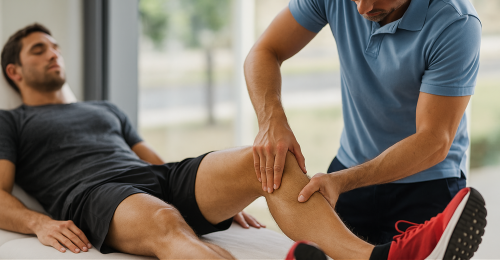
Incorporating passive or assisted stretching into your massage session can improve joint mobility and reduce stiffness in high-use areas like the hips, hamstrings, and calves.
Added bonus:
- Supports long-term flexibility
- Enhances neuromuscular coordination
- Helps prevent future soreness with better movement mechanics
This is a great add-on to any massage and ideal during the recovery phase when you’re easing back into training.
When Should You Book a Massage After a 5K?
Here’s a general timeline based on how you feel after the race:
| When to Book | What to Expect |
| Same day | Very light recovery work only (lymphatic or gentle sports massage) |
| 24–48 hours after | Best time for sports massage or myofascial release |
| 3–5 days after | Ideal for deeper work like trigger point therapy |
| Ongoing | Weekly or biweekly sessions for consistent training recovery |
Recover Smarter, Run Stronger
Massage therapy isn’t just about post-race relaxation—it’s a powerful tool for reducing soreness, preventing injury, and improving your performance with every race you run.
At Keystone Body Therapies, we help runners recover the right way. Our therapists customize each session based on your training, soreness level, and long-term performance goals.
